← Back to Blog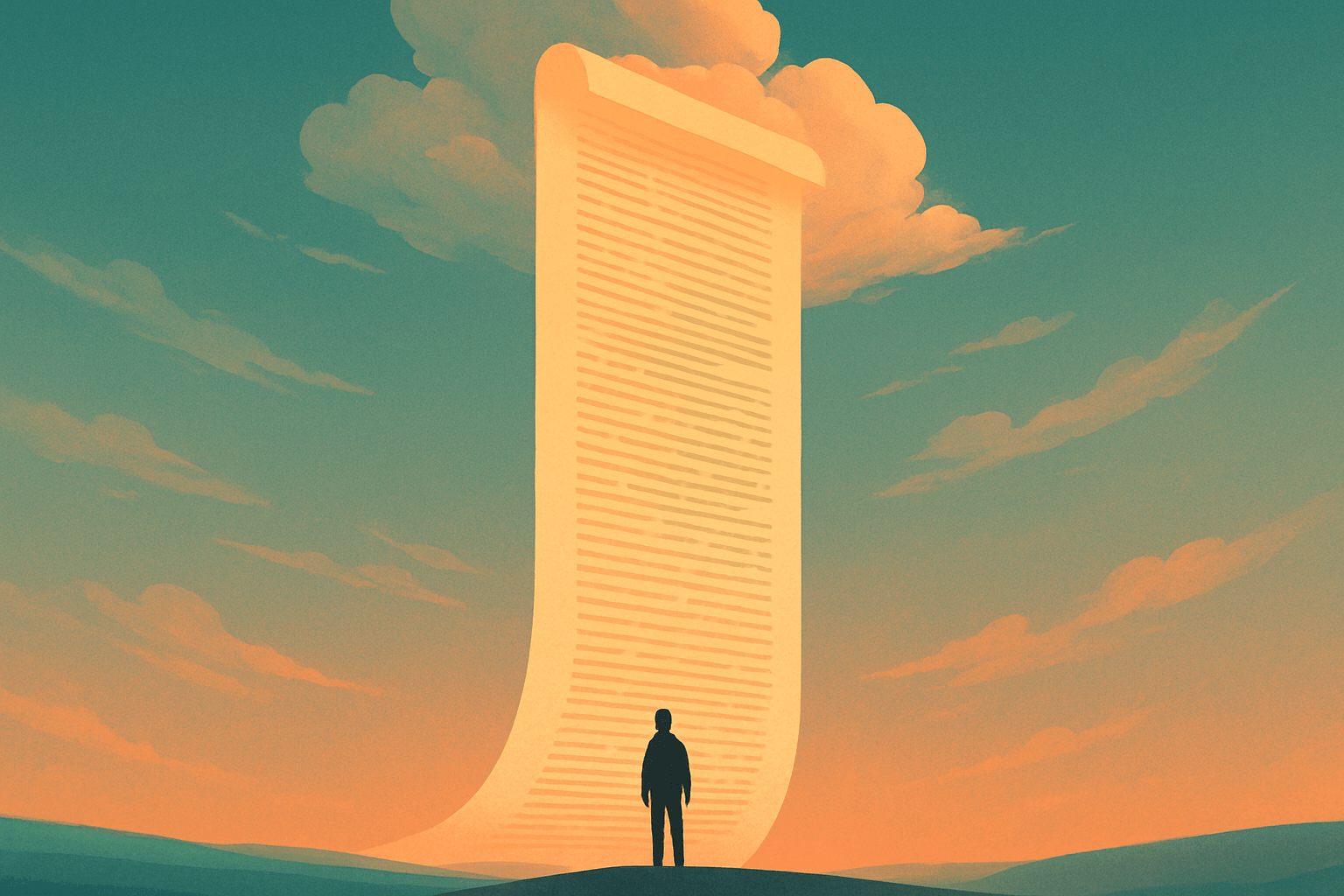
Longer Than a Novel: Why We Don't Read T&Cs (But Should Anyway)
Behavioral PsychologyWe scroll. We click. We ignore. But T&Cs aren’t optional reading , they’re the binding contract you’ve already agreed to. Here's why they matter more than we admit.
Why No One Reads T&Cs
- They’re long. The average privacy policy is over 2,500 words.
- They’re boring. Legal jargon isn’t exactly TikTok material.
- They’re dense. One sentence might contain five legal conditions.
- We trust the platform (and assume everyone else clicked “Accept” too).
In short: it feels like a waste of time , until it’s not.
What’s Hidden in All That Legal Text
- Automatic renewals with no email reminder
- Data-sharing with third parties you’ve never heard of
- Arbitration clauses stripping your legal rights
- The right to change terms at any time without notice
- Usage of your content (photos, messages, files) for promotion
And that’s just on page one.
The Netflix Clause That Wasn’t
A tech journalist once invented a fake clause in a fake T&C agreement:
"By accepting this, you agree to hand over your immortal soul."
Guess what? Over 7,500 people accepted. No questions asked.
Point made.
What Happens When You Don't Read
- You pay for services you don’t use
- You give up your content rights
- You lose your refund eligibility
- You unknowingly permit tracking and targeting
- You limit your ability to fight back when something goes wrong
Why Companies Keep T&Cs So Complex
- To protect themselves from lawsuits
- To gain flexibility in pricing and data use
- To reduce complaints by hiding details users won’t find
- To overwhelm you into passive agreement
Complexity is a feature , not a bug.
What You Can Do Instead
- Use Termwise: It highlights risks in simple language
- Ctrl + F for keywords: “data,” “arbitration,” “fees,” “content”
- Skip the bulk, read the bullets and summaries
- Don’t trust familiarity , even popular apps change their T&Cs frequently
Summary
The truth is, T&Cs are designed to be unread. But the cost of ignoring them is real , and rising. With smarter tools and small habits, you can stop signing away your rights in your sleep.
blind consentdigital consentlegal design